Developers 2.0: What comes after "AI-powered"


Almost all developers are using AI now, and some of them even call themselves “AI-powered developers." But is it enough for the software development to be truly transformed? For most teams, the effect is less dramatic than you might think. Look at this post on the Claude website called AI-native SDLC playbook . In particular, this diagram, which shows what happens when we can write code much faster than before:
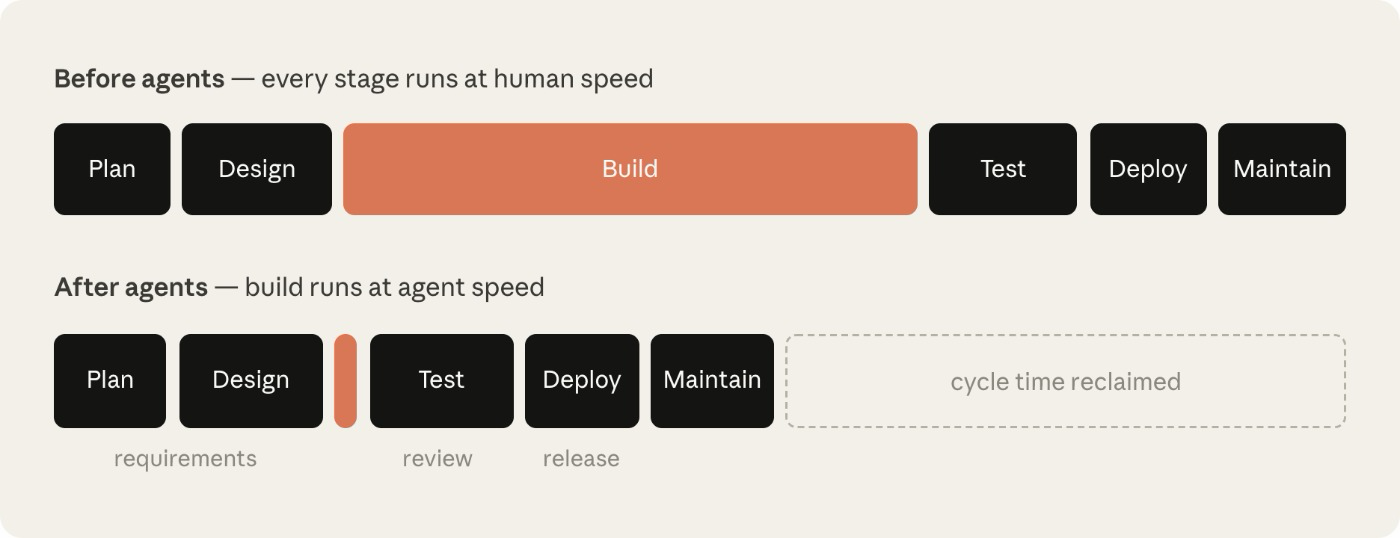
Task lifecycle before and after agents. Credit: Claude
As you can see, the overall cycle time decreases, but not as much, because the overall speed is limited by steps that humans need to take. I don't think I buy everything in this post, but I think they correctly pointed out that when we can write the code faster, something else becomes a bottleneck, and for most teams, it’s communication. Code reviews, approvals, deciding what needs to be built, figuring out the specifications, and so on.
Who is ready for the change?
If we want to build faster, we need to change how teams operate, but who is actually ready for the change? Teams are made of people, and different people use AI differently. Researchers from Harvard Business School studied how people use AI and put them in three groups: Cyborgs, Centaurs, and Self-Automators. Cyborgs are those who work together with AI very closely. They brainstorm ideas together, try to understand what AI is doing, push AI limits, push their own limits, and overall, use AI to extend their own capabilities and learn new skills.
Centaurs divide all their work into two areas—what they do themselves and what they delegate to AI. And finally, there are self-automators, who delegate thinking to AI. They just throw their task at it and probably do some quality checks of the result, and that’s it. They don’t learn much in the process and actually lose their skills that they had previously when they were doing this work themselves. There's another term for this circulating on the internet: "meat proxy," which is rude but, unfortunately, accurate, because such people don't add much value on top of AI agents. Changing the team structure and operation means that people will need to adapt and learn new skills, but not all people who use AI actually want to learn something.
We've seen it before
We’ve already seen something similar in the past. While most engineers chose rather narrow specializations, like backend developers, frontend developers, operations, quality assurance, security, and so on, there was also a movement in the opposite direction: full-stack development. At our company, we’ve been hiring almost exclusively full-stack developers for more than a decade now. It wasn’t easy to find highly qualified full-stack developers, but we felt like it was worth it because the benefits were so obvious. We can work much faster if we eliminate that back and forth between backend developers, frontend developers, operations, and so on. So team communication was already a bottleneck before AI, and now it becomes even more apparent.
Learning new skills
What AI changes in this equation is that it makes it easier to expand into new areas and learn new skills for those people who want to do so. And once that happens, the most natural thing for such people would be to get more autonomy and build complete features or even projects themselves. This is what I call Full-stack Developer 2.0: One person who can work on product, design, engineering, and security.
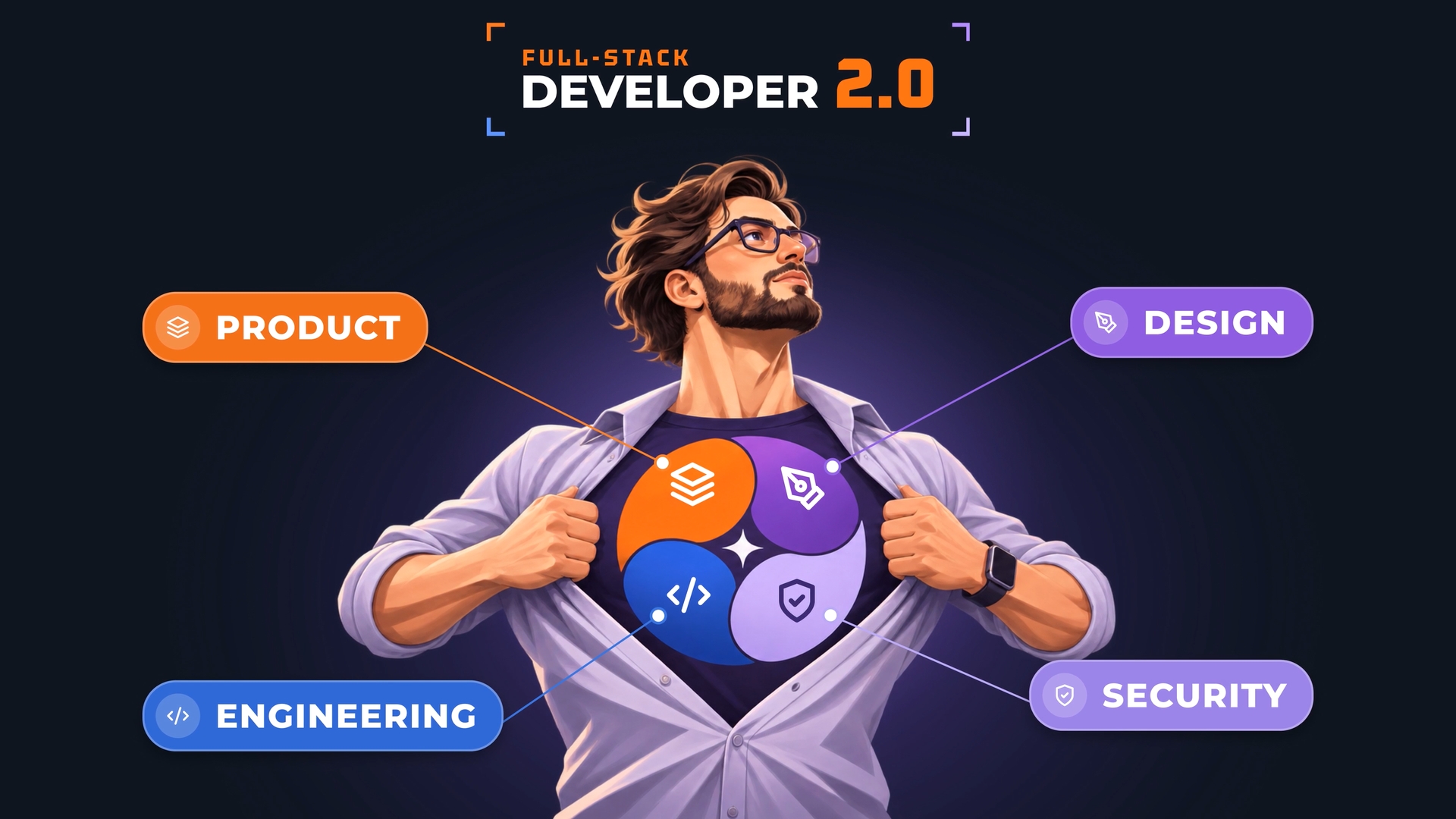
Not only developers can switch to this role. For example, it could be a product manager or a designer who wants to build things themselves. Anyone can acquire these new skills that would allow them to build it all.
What about taste?
A one-million dollar question: How good will people be at these new skills? For example, let's talk about developers who want to expand into design. Historically, designs made by developers were usually not very good, let’s put it mildly. And now, if they ask AI to create a design without providing too much guidance, it’ll produce an average design, at best. To create something really good, they need to have taste.
Is it even possible to acquire taste? I personally think there’s nothing magical about it. Taste emerges when you practice. Trying to build stuff yourself, getting user feedback, reviewing what others did, noticing what exactly makes good design good, and repeating that many times—this is a recipe for becoming a good designer. No magic, just practice and trying to constantly improve.
In our company, we let developers practice on our own projects. We also provide coaching and help of a professional designer when they need it. And it works! So if you want to become a better designer, or a better engineer, or a product manager, you can, just practice.
One-person teams
If we now have folks who can do it all, does it mean we can have one-person teams? Yes! For some of our clients, it’s exactly that: one person who does it all, and I would say it goes pretty good. In fact, it's not an even entirely new idea. For example, look at the Indie Hackers community—it existed long before AI. It's made of people who are building their product themselves, wearing all possible hats in the process. Now, AI makes it easier to expand to other areas, and more people can become "indie hackers." And it's not just solopreneurs; we see the same happening in the enterprise environment, and we see it in our company.
How powerful one person can be? Well, I think it’s a great fit for smaller projects and early stage startups. They can build faster than teams consisting of narrow specialists, and it’s obviously cheaper. For larger projects, we may still need more people. Even if someone is very good at launching agents and guiding them, they can’t scale the number of those agents indefinitely.
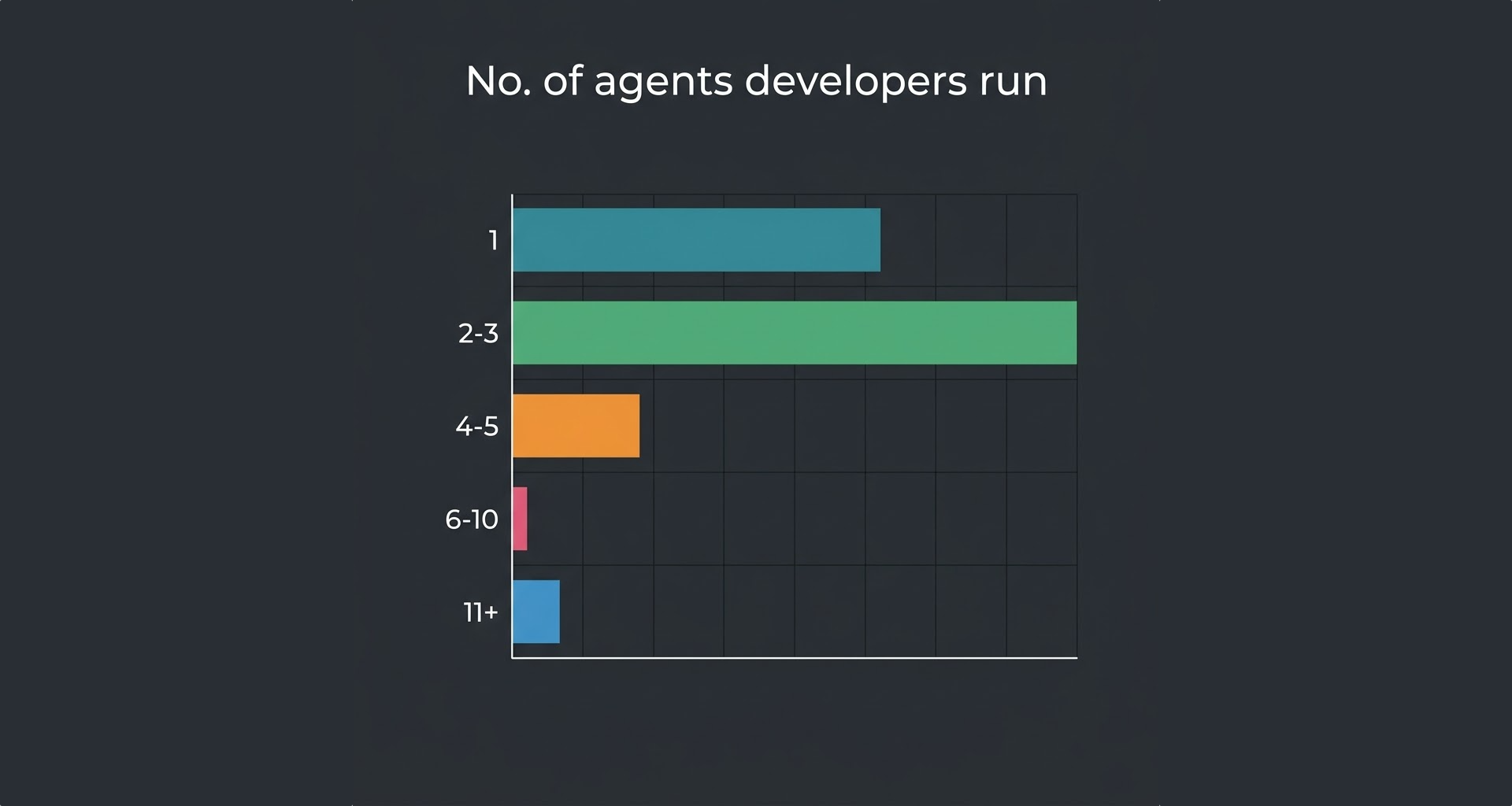
Poll: How many agents you can run while paying enough attention to them?
I posted a poll in developer chats asking people how many agents they can comfortably run while paying enough attention to what they’re doing. For most people, it’s just one or two, or sometimes, three agents. And even two or three agents already require people to multitask, constantly switching from one task to another, and quite often it doesn’t increase productivity but only adds exhaustion. So, larger projects may still need larger teams, but if the project isn’t so large, a one-person team might be the best fit.
Bottom line
As I mentioned above, not everyone will move into this Developer 2.0 role, but some people will. We at ivelum specialize in finding and training such people, who can build it all. We provide them everything they might need, tools, practice, coaching, and also put a certain bar on the quality of their work, so if you hire a senior full-stack developer from us, it means they’re really senior. And if you need such a superhero for your project — just get in touch.